Manténgase sano!
- Posted February 27, 2026
Wildfire Smoke Linked To Increase In Violent Assaults
It’s a fact that people become “crazy from the heat,” but a new study suggests that “crazy from the smoke” might also be a phenomenon.
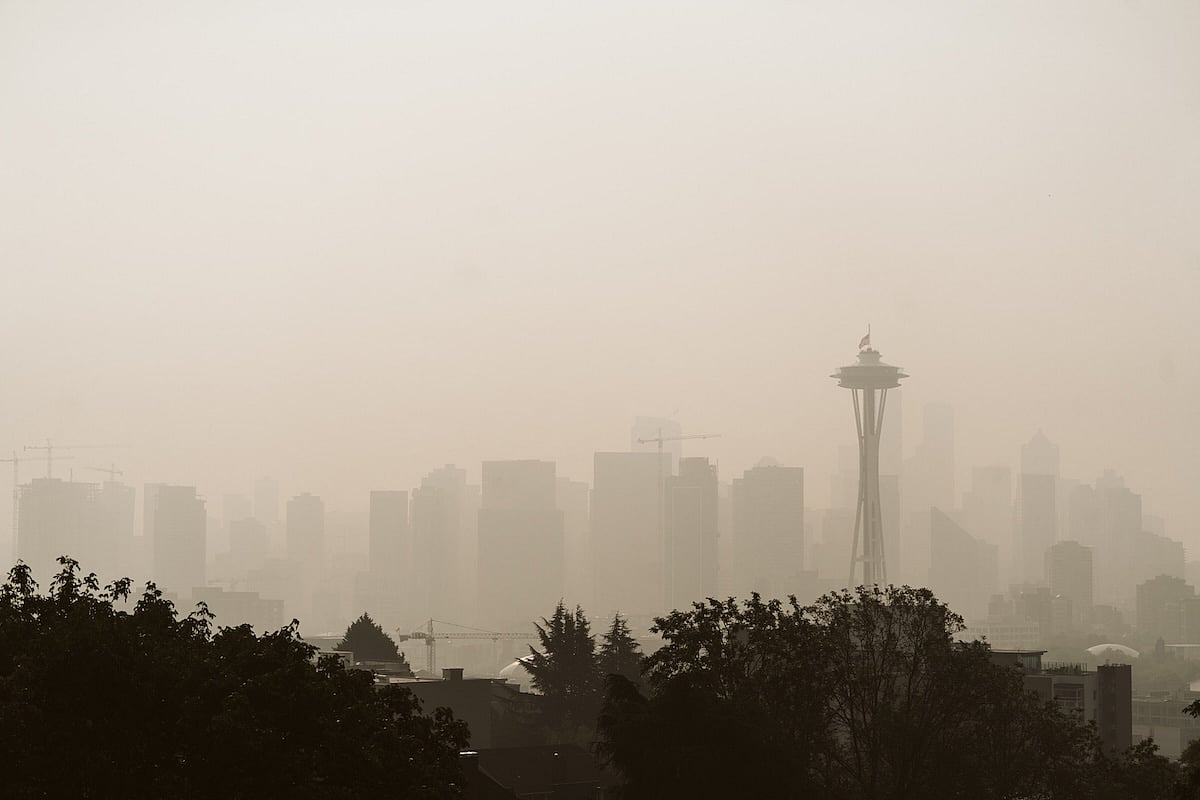
Skies choked with smoke from wildfires are linked to an increase in violent assaults, a new study has found.
Assaults increased by nearly 4% in Seattle on smoke-filled days, researchers reported Feb. 26 in the journal Environmental Research Letters.
What’s more, daily assaults increased by 0.5% for every 1 microgram per cubic liter increase in fine particle air pollution from wildfires, researchers found.
“Our findings show that actions to mitigate climate change and improve wildfire management can offer public safety benefits beyond just better health outcomes,” researcher Lion Kircheis said in a news release. He's a doctoral researcher at the University of Konstanz in Germany.
For the new study, Kircheis tracked wildfire smoke patterns in Seattle from 2013 to 2023 and compared them to police reports of assaults.
During the study period, wildfire smoke increased daily levels of fine particle pollution by an average of 7 micrograms per cubic meter of air.
The results suggest that wildfire smoke puts people on edge, causing discomfort and stress that makes them more prone to violence, Kircheis said.
Importantly, Kircheis ruled out other factors that might contribute to increased violence.
For example, police response times remained stable on smoky days, and domestic violence calls did not increase.
That suggests that a lack of police presence couldn’t explain the increase in assaults, and that the effect is concentrated in outdoor settings most exposed to wildfire smoke.
However, incidents where police officers used force did increase on smoky days, mirroring the increase in assaults and further supporting the notion that smoke could be driving people toward violence.
These results are troubling, given that climate change is expected to cause longer and more intense wildfires across North America, Kircheis said.
“What really stands out in the study is that the burden of wildfire smoke won’t be shared equally,” Kircheis said. “Outdoor workers, people without access to clean indoor air and those experiencing homelessness are likely to feel the effects most intensely, and that’s something we can’t ignore.”
More information
The U.S. Centers for Disease Control and Prevention has more on wildfire smoke and health.
SOURCE: IOP Publishing, news release, Feb. 26, 2026
